

Student Stand or Systemic Shift? How the Panjab University Protest Re-fired the Autonomy Debate
A student-led protest at Panjab University has reignited the national debate on university autonomy after the Centre proposed sweeping changes to its Senate and Syndicate structure. The move, viewed as an attempt to centralize control, sparked sit-ins, hunger strikes, and widespread campus mobilization. Though the government later withdrew the notification, students continue their agitation, demanding timely Senate elections and protection of the university’s democratic character.
 Rachna Das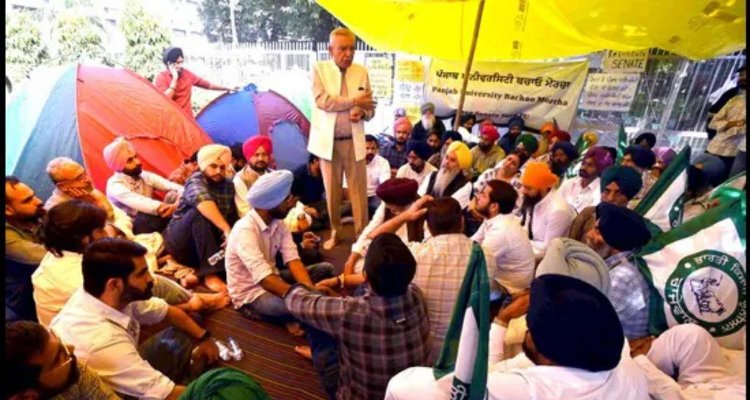





A student-led movement at Panjab University in Chandigarh has sparked a renewed debate on university autonomy after the Centre proposed major structural changes to the institution’s governance. The October 2025 notification from the Ministry of Education sought to cut the university’s Senate from 91 to 31 members and alter its Syndicate composition — moves critics saw as centralising control and diluting the voice of elected representatives.
Students, under the banner of Panjab University Bachao Morcha, began sit-ins, hunger strikes, and gate blockades, demanding both the rollback of the order and the immediate scheduling of long-pending Senate elections. Although the Centre withdrew the notification on November 7, protesters have continued their agitation, insisting the rollback is only “temporary” and warning against future attempts to curb the university’s democratic functioning.
The unrest has drawn support from faculty members, farmer unions, and opposition parties, framing the issue as part of a larger struggle between institutional freedom and bureaucratic reform. As tensions persist, Panjab University stands at the crossroads of tradition and transformation — a reminder that the fight for academic autonomy is far from over in India’s evolving education landscape.