

Delhi chokes again: AQI Hits ‘Severe’mark amid rising smog and stubble burning
Delhi’s air quality slipped into the “severe” category as the city’s average AQI reached 462, according to CPCB data.
 Swati Dubey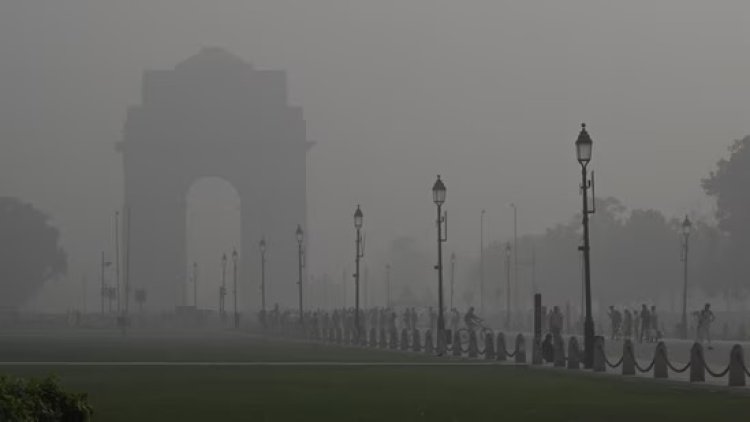





According to the Central Pollution Control Board (CPCB), Delhi’s average Air Quality Index (AQI) stood at 462 on Sunday, slipping once again into the “severe” category. A thick layer of smog shrouded the skyline, reducing visibility across several parts of the capital. The toxic air has reached hazardous levels, posing health risks to all residents, including otherwise healthy individuals.
Data from the Central Pollution Control Board (CPCB) showed that air quality remained in the “severe” range across most parts of Delhi. Anand Vihar recorded an AQI of around 498, Jahangirpuri 485, and Mundka 472, all falling under the severe category. According to the System of Air Quality and Weather Forecasting and Research (SAFAR), PM2.5 levels were nearly eight times higher than the safe limit prescribed by the World Health Organization (WHO). The India Meteorological Department (IMD) reported calm winds and low temperatures, which prevented pollutants from dispersing and worsened smog accumulation.
Environmental experts have identified several factors behind the severe deterioration in Delhi’s air quality, including seasonal stubble burning, vehicular emissions, and stagnant weather conditions. Satellite data showed over 2,300 stubble-burning incidents in Punjab and Haryana this week, contributing to the sharp rise in particulate matter over northern India. Within Delhi, vehicular emissions, construction dust, and industrial activities continue to be major local contributors. The India Meteorological Department (IMD) has reported low wind speeds and temperature inversion, which trap pollutants near the ground and prevent their dispersion. Experts warn that unless regional emissions are addressed in coordination with neighboring states,Pulmonogists have, mentioned that such pollution levels can be dangerous for children, the elderly, and people with pre-existing heart or lung conditions. Authorities have advised residents to stay indoors as much as possible, use N95 masks, and avoid outdoor exercise until the air quality improves.
In response to the worsening air quality, the Commission for Air Quality Management (CAQM) has enforced Stage IV of the Graded Response Action Plan (GRAP), which includes the strictest set of anti-pollution measures. Construction and demolition activities have been temporarily banned, except for essential public projects. Entry of diesel trucks into the city has also been restricted, and the Delhi government has urged people to use public transport or carpool whenever possible. Schools have been asked to shift to online classes for lower grades, and government offices have been advised to implement work-from-home arrangements. Officials said these measures are aimed at reducing emissions and controlling dust levels, though experts believe their effectiveness will depend on strict enforcement and regional cooperation.
Experts believe that while emergency measures help reduce pollution temporarily, Delhi’s air quality crisis demands long-term and coordinated action. They suggest stricter implementation of emission norms, better waste management, and a shift towards cleaner public transport. Environmentalists also stress the need for stronger cooperation between Delhi and neighboring states to address stubble burning and industrial emissions at the regional level. Until sustained efforts are made, the capital is likely to face recurring smog and health risks every winter. Clean air, they say, must be treated not as a privilege, but as a basic right for every citizen.